Overview
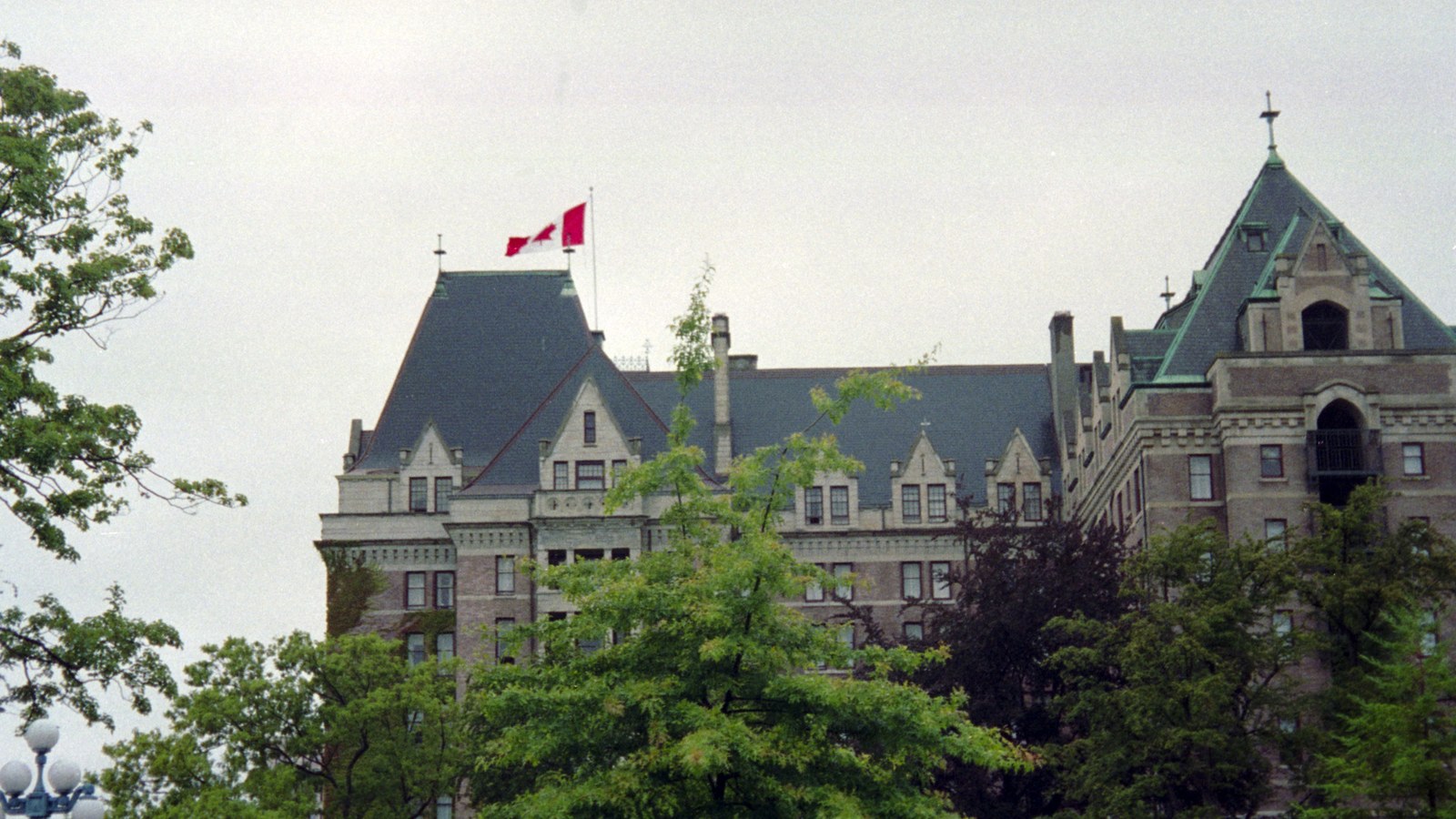
The Fairmont Empress stands on the Inner Harbour in Victoria, British Columbia, at 721 Government Street. The Canadian Pacific Railway opened it in 1908 as a destination hotel on its western transcontinental route. It is a National Historic Site, has 431 rooms, and is best known from the street for its green copper roofs, stone walls and castle-like silhouette.
Afternoon tea here is not the daily business of an independent teahouse. It is a hotel dining experience marketed as "Tea at the Empress". The useful way to understand it is: a formal English afternoon tea served inside a historic harbourfront hotel, not "a teahouse called the Empress" in Victoria.
History
The Canadian Pacific Railway built the hotel at a moment when Victoria was a transfer point for transcontinental trains, coastal ferries and Pacific shipping. The company wanted a stop with metropolitan weight, and the building was designed as a château facing the harbour rather than as a conventional downtown hotel. Francis Rattenbury, whose public buildings include the nearby British Columbia Parliament Buildings, was the architect.
The name points in two directions at once: to the Victorian monarch and to the CPR's "Empress" line of ocean liners. That double reference places the hotel in the age of railway and steamship travel, not merely in a generic "old English hotel" tradition.
In the later twentieth century the hotel was designated a National Historic Site. A renovation in the 2010s upgraded rooms, public areas and dining circulation while keeping the exterior and the harbourfront setting. From Government Street today, the building still reads as a stone castle pressed against the Inner Harbour. That is the most immediate difference between it and an ordinary city hotel.
Tea and space
The afternoon tea follows the familiar three-tier arrangement: finger sandwiches on the lower tier, scones with clotted cream and jam in the middle, pastries on top. The tea list is built around loose-leaf black teas, with Darjeeling, Earl Grey and English breakfast among the usual choices. Menus, pastries and prices change with the season; the official site does not present one fixed historic menu.
The room matters as much as the food. The hotel faces the Inner Harbour, with docks, gardens and the opposite shore in view; inside, dark woodwork, stone and high ceilings carry the formality of a grand hotel lobby. It is not a light, modern tea bar. The experience makes most sense as a full sitting rather than a quick photo stop.
Visiting
Address: 721 Government Street, Victoria, BC V8W 1W5, Canada. Status: the hotel is operating; afternoon tea should be booked according to the official site's current information. Checked on 25 November 2026.
Tea is usually served in a designated dining room or lounge within the hotel. Times, seating and prices should be taken from the official page on the day of booking. Because this is a hotel service, not a standalone teahouse, it does not fit a "walk in and order a pot of tea" itinerary.
Source boundaries
This page uses only facts that the hotel website and Wikipedia support in common: the 1908 opening, the CPR background, Francis Rattenbury, National Historic Site status, 431 rooms, the Inner Harbour location and the afternoon tea experience. Older copy about private royal visits, exact prices, a particular "best afternoon tea" award and the recipe for an "Empress Blend" does not form a complete evidence chain in those two sources, so it is not repeated here.
The claim that tea was served from the hotel's first day in 1908 is also not stated as fact. The safer formulation is that the hotel presents afternoon tea as a tradition that continues today; the official site confirms that it currently operates, but does not provide the menu or archive of the first tea service.