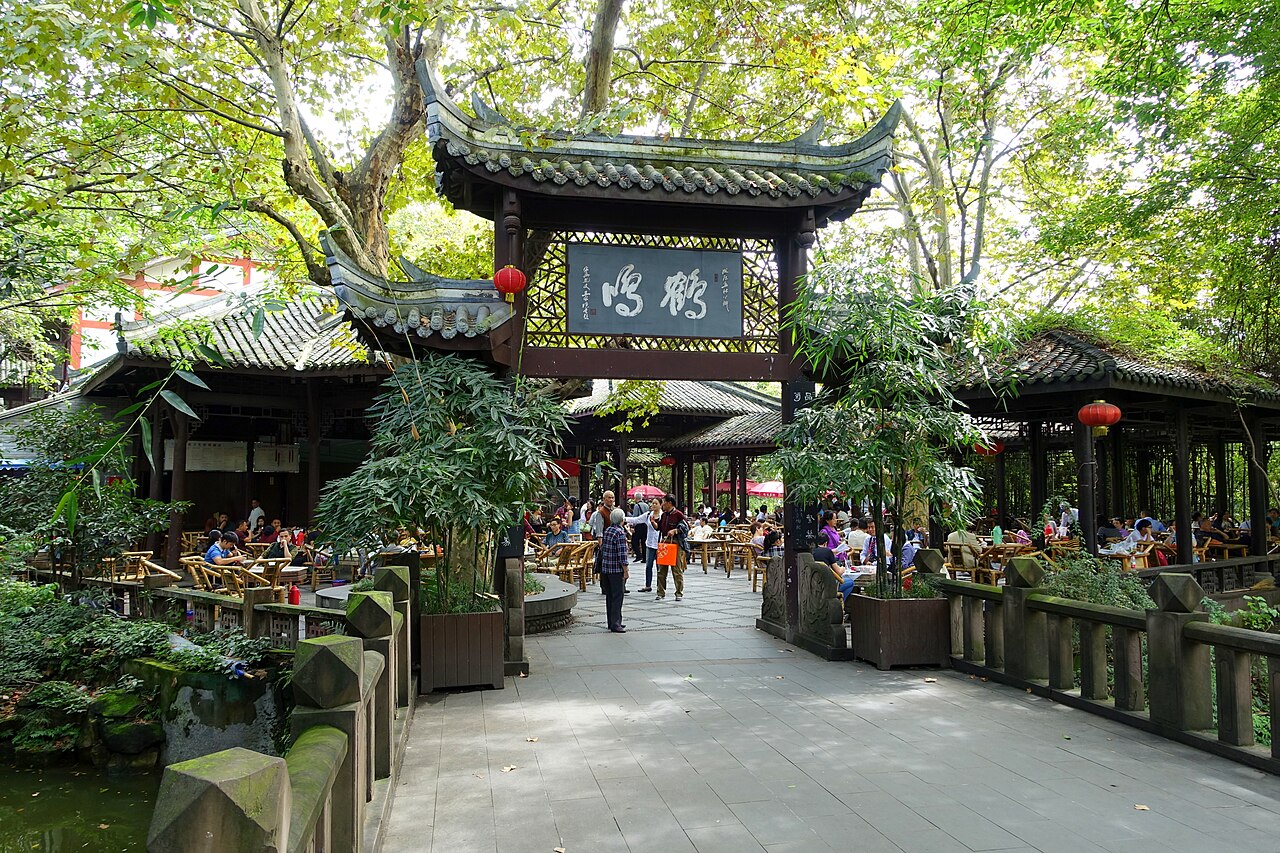
An old tea house inside a public park
Heming sits inside Chengdu’s People’s Park. It is not a separate tea building but part of the park’s public space: in the morning people come to drink tea, talk and read the paper; at midday some eat noodles and trade gossip; by afternoon the bamboo chairs are nearly full and long-spout copper kettles move between the tables. To read Heming, begin with how the park is used, then with the word “century”.
In Chengdu, “sitting in a tea house” is an everyday action, not a cultural performance. Heming’s value lies in still running on that action: order a gaiwan, ask for more water, sit for a long time, do nothing.
1923 and the name
People's Daily Online (Sichuan) reports that Heming was founded in 1923 by a merchant surnamed Gong from Dayi. The name comes from a line in the Classic of Poetry: “The crane calls in the deep marsh, its voice reaches heaven.” The line connects a commercial tea house to a literary tradition, but the actual clientele has always been a mix of residents, visitors and people passing through the park.
In 2023 the tea house held a centenary celebration. “A century” refers to the business history from 1923, not to a building that has never been altered. The park and the tea house were repaired and rebuilt several times; today’s bamboo chairs, low tables and courtyard layout are the result of long use and repeated renewal.
How to drink a gaiwan
- The gaiwan. Bowl, lid and saucer. The lid can push leaves aside and hold aroma; it can also signal that you want more water. The saucer prevents burns. Do not clamp the lid shut the whole time, and do not drink from the bowl as if it were a mug.
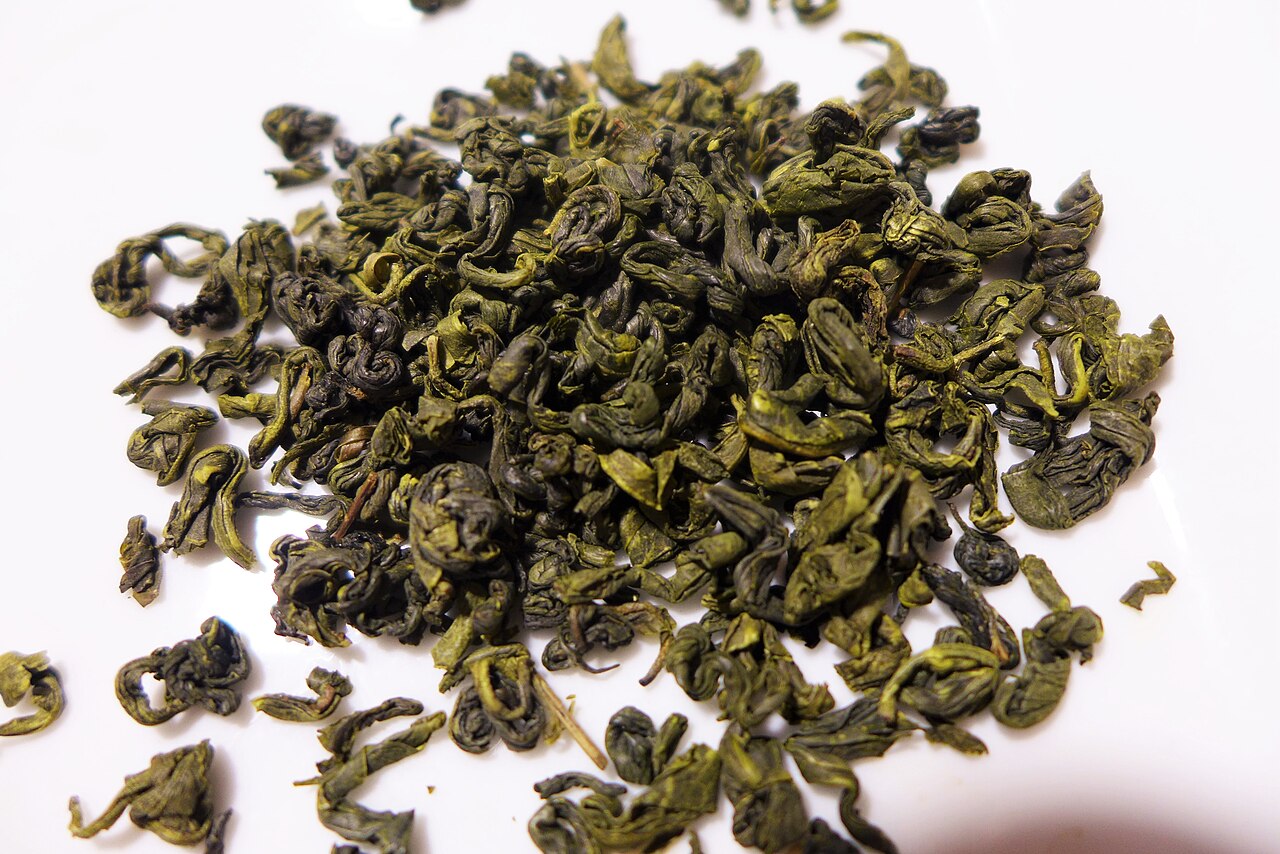
- The tea. Common choices include jasmine tea, Bitan Piaoxue and Zhuyeqing. Jasmine tea is a scented tea, not “green tea with perfume”; Bitan Piaoxue is one of Sichuan’s best-known scented teas. The actual list depends on the day.
- Long-spout pouring. A server pours from a copper kettle with a long spout. It is both performance and service. Watch whether the stream is steady, whether it splashes and whether it fills the bowl to about eight-tenths. Do not block the aisle to film it.
- Refills and lingering. The rhythm is slow. One pot can be refilled many times, and a guest may stay half the day. This is the rule of a park tea house, not a failure of table turnover.
- Snacks and food. Guests often bring sunflower seeds, peanuts or fruit; some order dumplings or noodles. Clean up your own rubbish and do not treat the park as your living room.
What to look at in the space
- Bamboo chairs and low tables. The back is low and the table is short, so the body naturally leans back. The scale suits long conversation, not laptop work.
- Courtyard and shade. Seats sit in the open courtyard and under trees. Watch how sunlight, leaf shadow and umbrellas move through the day; they decide which table is comfortable at which hour.
- Kettles and cups. Copper kettles, gaiwan and glasses coexist. Different vessels are not for looks; they affect pouring, heat retention and how clearly you see the liquor.
- Ear cleaning, mahjong and cards. These are common park tea-house extras and part of the soundscape. Whether you want them is a personal choice.
Visiting information
Address: inside People’s Park, 12 Shaocheng Road, Qingyang District, Chengdu.
Operating status: this page has not independently verified current hours, tea prices or seating rules. Heming is inside a public park and is usually full on holidays. Arrive early if you want a bamboo chair. Ask the server before filming a long-spout pour, and do not block other guests.
Sources and status
This page relies on People’s Daily Online (Sichuan)’s centenary report and The Paper’s feature on Heming. The People’s Daily report supports the 1923 founding, the founder’s Dayi origin, the name’s source, the People’s Park location and the 2023 centenary. The Paper supports the bamboo chairs, low tables, gaiwan, long-spout kettle, refills and bring-your-own snacks. Unsourced legacy claims — “the only old tea house in Chengdu”, “a famous person always sat in a fixed seat” — have been removed. All migrated pages are currently marked reviewed, but sources and wording will continue to be revised.