A tea house still living its daily life
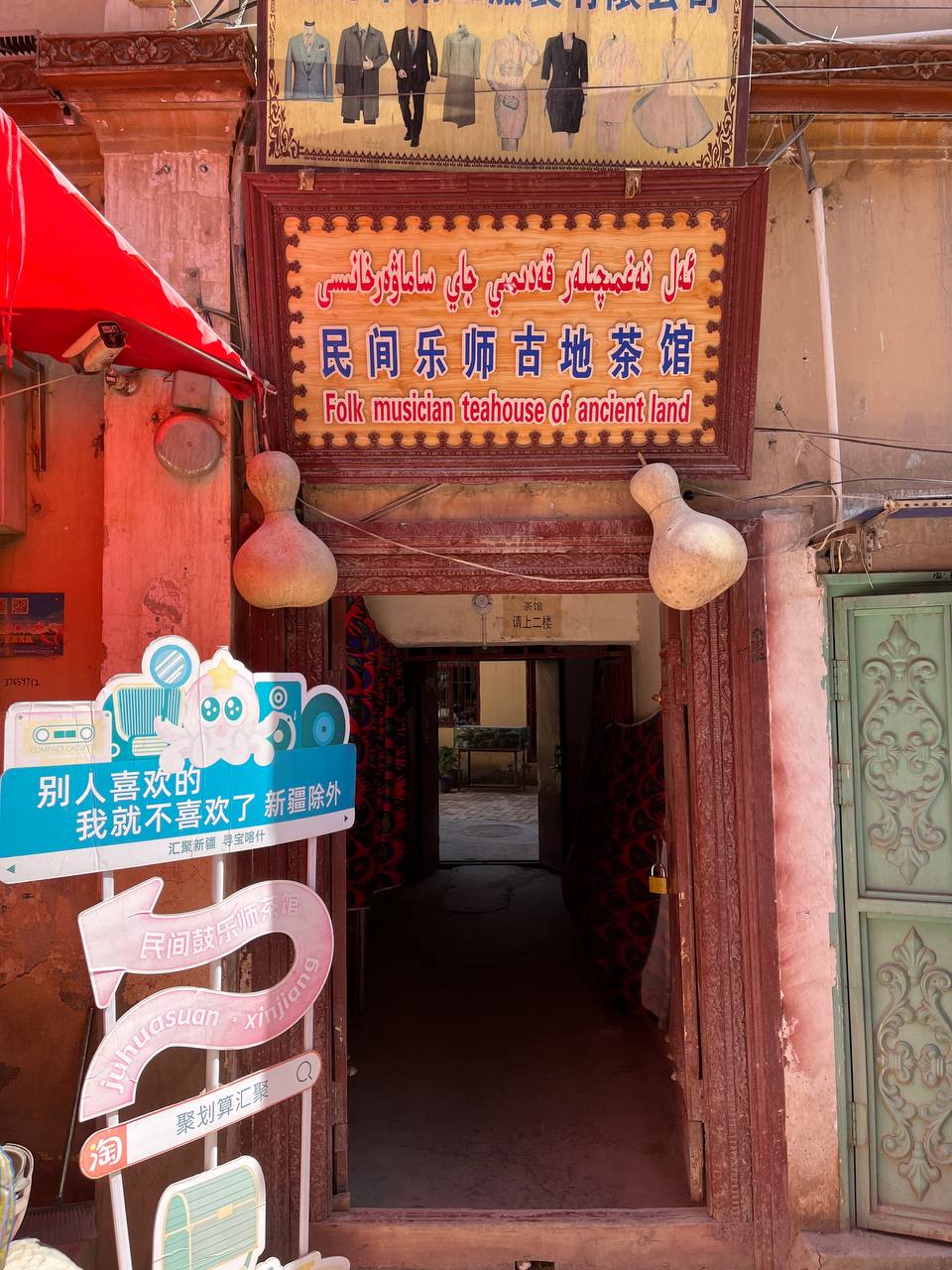
Kashgar Old Tea House stands at the junction of Wusitangboyi Road and Kumudai’erwaza Road in the old town. It is first a working tea house: earthen platforms, felt carpets, low tables, naan, copper pots and glasses that are refilled again and again. Only after that is it a “Silk Road memory” in a visitor’s camera.
Reading it as “the terminus of the Silk Road” is romantic, but the public sources do not support such a single geographical verdict. A more reliable reading is that Kashgar was long an important node in trade between the northern and southern sides of Xinjiang and with Central Asia. Tea arrived by long-distance transport, then combined with local food, etiquette and sociability to produce the tea-house life visible today.
A century and four generations
Public reports do not agree on a founding year. They call it a “century-old tea house” without fixing a date. The Kashgar Prefecture government website names Maimaitikelimu Maimaiti as the fourth-generation operator; the Tianshan Net report also mentions his father, Maimaiti Wusiman, in the running and planning of the business. What can be confirmed is family operation and the “century” name, not a precise starting year.
In 2013 the tea house was repaired and upgraded. Tianshan Net records that the work kept the traditional wooden structure, restored the carved eaves and added glass windows to what had been an open second-floor corridor, so that guests could sit there in winter and summer. “Old” does not mean unchanging: the earthen platform, wooden windows and old habits remain, while light, warmth and the view have been reorganised.
The tea list: clear tea, fu brick and medicinal infusions
- Clear tea. Local regulars often order the cheapest clear tea and keep the pot for a long time. A 2023 report mentioned 28 yuan for a pot of clear tea and 2 yuan for a naan. Those are reported prices at that moment, not a permanent tariff.
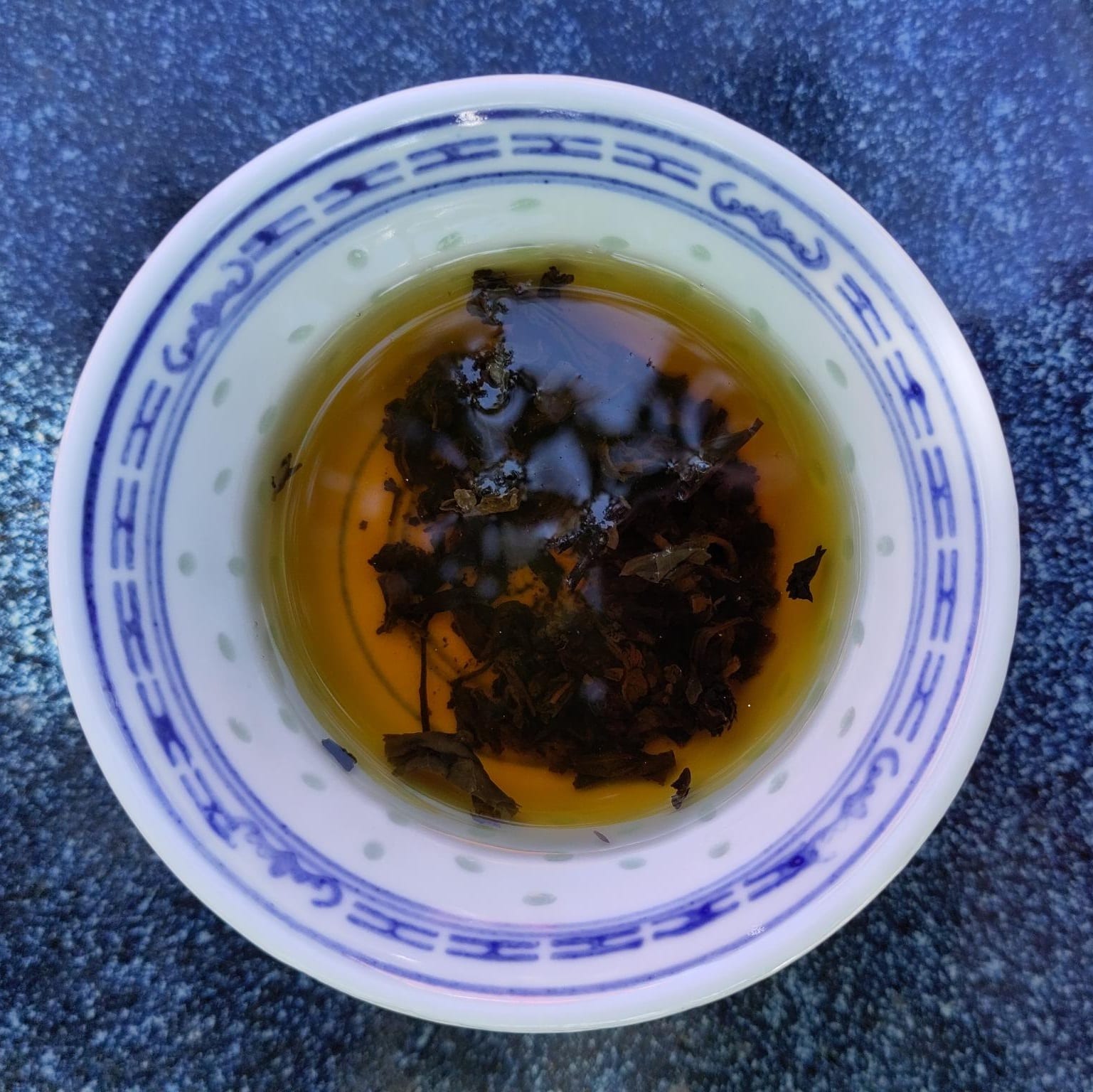
- Fu brick tea. Tianshan Net traces the tradition of drinking fu brick tea plain back more than a century. Fu brick arrives after long transport; boiled, it gives a dark, strong liquor that suits naan and dried fruit.
- Uyghur medicinal infusions. Common ingredients include saffron, rose, cardamom, clove and honey. Recipes differ by house and season; the Kashgar government page says some recipes use as many as eighteen ingredients. This is a culinary tradition, not medicine. “Warming” or “aid digestion” language should not be repeated as a therapeutic claim.
- Naan and dried fruit. Tea and naan usually appear together. Guests may bring their own baked buns, dried fruit or naan; the house also serves simple food. Rules vary.
Space and sound
- Earthen platform and felt. A raised platform runs along the wall, covered with felt; regulars sit cross-legged around low tables. Posture, spacing and who pours first say more about the room than the phrase “ethnic flavour”.
- Second-floor balcony. It looks over the flow of Wusitangboyi Street and the old-town roofs. It is a photography spot and also a quieter place for regulars.
- Muqam and rawap. After the 2013 upgrade, muqam and rawap performances became regular features. Music is not background sound; it is part of the sociability, sometimes from a resident band, sometimes from a guest.
- The order of pouring. Tianshan Net records that the youngest person at each table pours and offers tea in turn, with the first bowl going to an elder. The etiquette connects the tea house to family hierarchy.
Visiting information
Address: junction of Wusitangboyi Road and Kumudai’erwaza Road, Kashgar old town, Xinjiang.
Operating status: this page has not independently verified current hours, prices or private-room rules. A 2023 report said the house opened at 10:00 and closed at 23:00; reports from 2025 and 2026 show it still operating, but visitors should confirm locally or by telephone. The house is crowded in high season; ask before photographing other guests.
Sources and status
This page relies on the Kashgar Prefecture government website, Tianshan Net and a People’s Daily reprint of a Xinhua report. The government page supports the location, fourth-generation operator, table and room scale, medicinal-tea ingredients and English menu. Tianshan Net supports the road junction, the fu brick tradition, the 2013 repair, muqam performances and the order of pouring. People’s Daily supports the split between local and visitor drink choices and the “hot/cold” food-balance idea. Unsourced legacy claims — “the Silk Road’s terminus”, a heritage application, a precise late-nineteenth-century founding year — have been removed. All migrated pages are currently marked reviewed, but sources and wording will continue to be revised.