First separate the merchant from the tea room
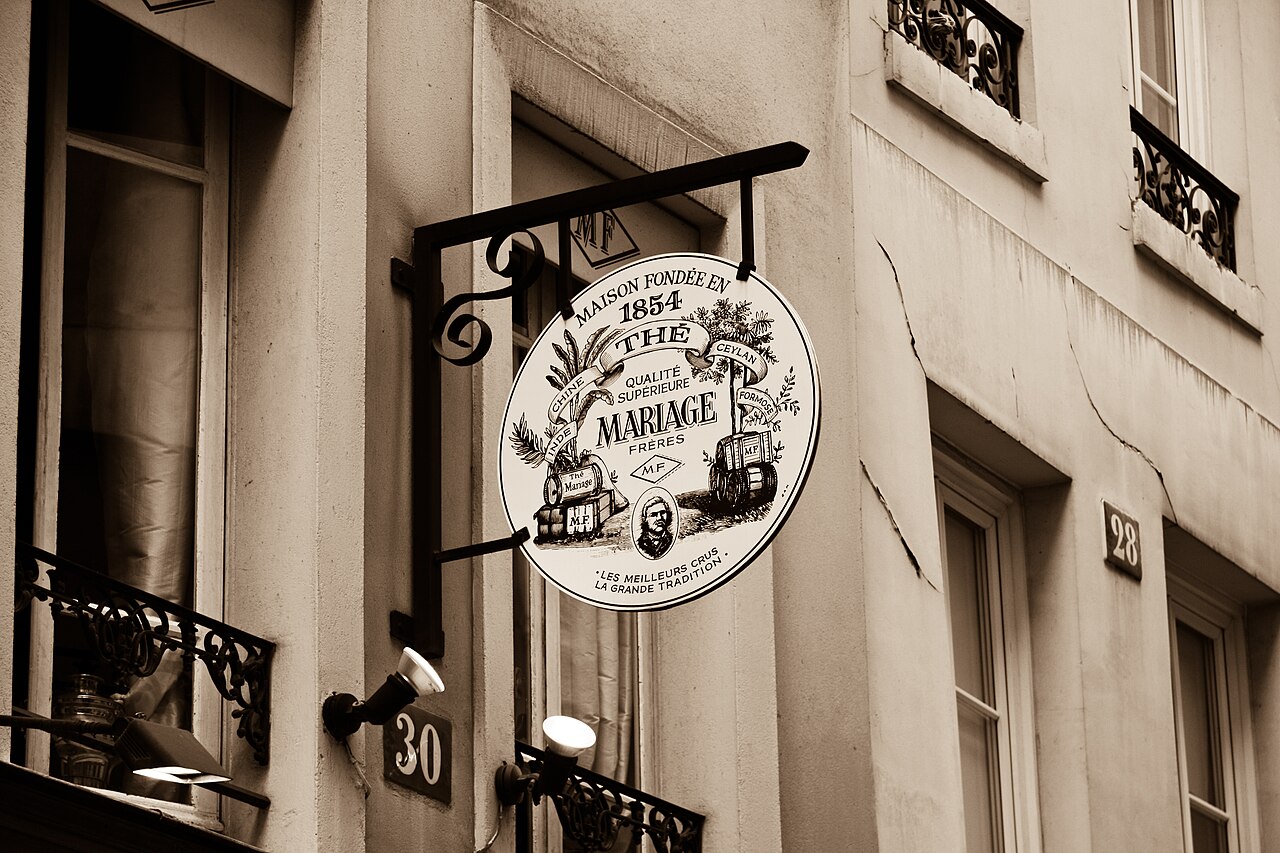
Mariage Frères is a tea importer and blender before it is the tea room in the Marais. The order matters. When it was founded in 1854 it was a wholesale business supplying fine grocers, tea rooms and hotels. Only in 1984 did it open to retail, and only then did the Marais address become the place where visitors queue for tea.
Reading “founded in 1854” as “opened a tea room in 1854” compresses a wholesale history into a photo stop. A more accurate sequence is: a family trading network and tea sourcing first; a branded retail space and tea-room experience later.
Family trade and 1854
The official history traces the family’s trade to 1660: Nicolas Mariage travelled to Persia, the East Indies and India; his brother Pierre sailed to Madagascar. A century later, Jean-François Mariage traded tea, spices and colonial goods in Lille and trained his four sons in the business. On 1 June 1854, Henri and Édouard Mariage founded Mariage Frères in Paris.
The official page calls the house the leading French tea importer and says it supplied “the best houses, the finest delicatessens and tearooms and the most renowned hotels”. That is a brand self-description, not an independent market-share statistic. It does establish that nineteenth-century Mariage Frères was a business-to-business merchant, not a tourist tea salon.
The 1984 retail turn
In 1984 the house opened to retail, with a tea counter and tea room at 30 rue du Bourg-Tibourg in the Marais. The official history says the tea salon was the first of its kind to offer brunch in Paris, and that fashion, cinema, theatre and press people soon made “brunch at Mariage Frères” a meeting place. “First of its kind” is again the brand’s own claim. What can be checked is that the tea room did combine tea service with brunch and that the format continues.
The shop keeps vintage tea crates, scales, filters, scoops and old counters; the official page says they came from the historic tea office and depot. They are not simply set dressing. They are the working traces of a merchant house turning into a retail space. When reading the room, notice the sequence of counter, canisters, menu and table: whether you choose tea before sitting or sit before ordering changes how you use the shop.
Today’s menu and the “French Art of Tea”
The official site says the houses hold more than 1,000 teas, including blends and single-origin teas. That is the brand’s own figure. It describes the range, not the stock of every tea in every shop. “French Art of Tea” is the brand’s language for organising flavour, vessels and service. It is not a national standard and not a neutral category system.
When reading a blend, look at the ingredient list and the intended flavour direction. When reading a single-origin tea, look at region, year and picking. They cannot be compared only by “tastes good”. A blend aims at consistency and a house style; a single-origin tea aims to show a particular garden and a particular year.
Signature blends such as Marco Polo are often presented through travel, red fruit and vanilla. Without an official ingredient page or independent reporting, treat that as brand narrative rather than repeating a precise creation year or formula.
Visiting information
Address: 30 Rue du Bourg-Tibourg, 75004 Paris, France.
The official store page currently lists the tea counter at roughly 10:30–19:30 and the restaurant and tea room at roughly 12:00–19:00; the tea museum is listed separately and may be closed. Hours change with season, holidays and internal arrangements. Confirm on the official site or by telephone before visiting. The tea room accepts bookings at +33 1 42 72 28 11.
Sources and status
This page relies on Mariage Frères’ official Japanese history page and official store list. The history page supports the 1854 founding, the wholesale clients, the 1984 retail and tea-room opening, the 1990 Tokyo flagship and the 1,000-tea figure. The store list supports the address and stated hours. Unsourced legacy claims — a 1900 world’s fair gold medal, tea hidden during the Second World War, a 2002 “living heritage company” listing — have been removed. All migrated pages are currently marked reviewed, but sources and wording will continue to be revised.