Overview
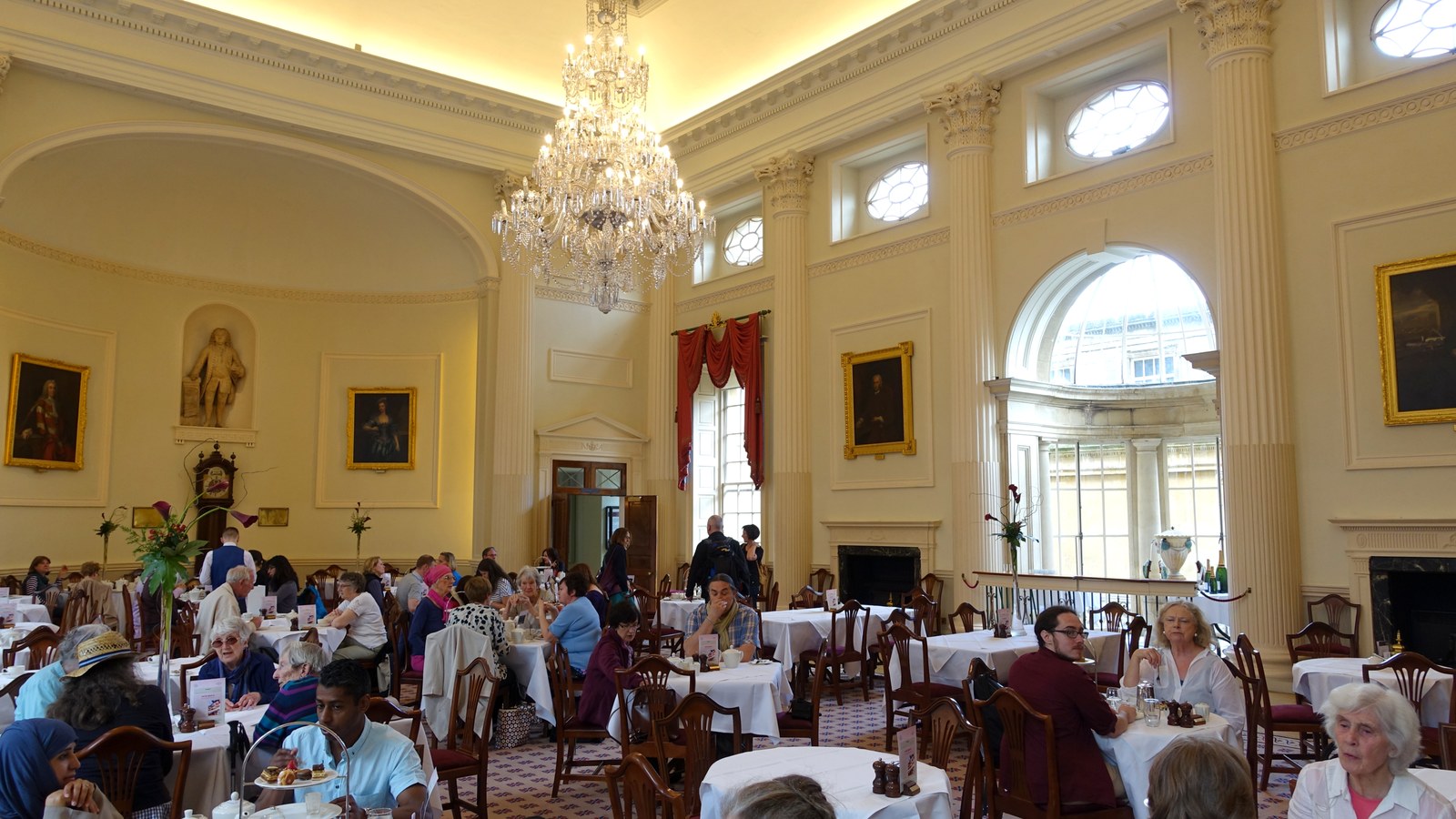
The Pump Room in Bath stands beside the Roman Baths at Abbey Churchyard, with its address on Stall Street. It was not built as a teahouse for selling tea. It was the social core of an eighteenth-century spa city, where visitors drank mineral water, listened to music and met one another. Today the same hall serves breakfast, lunch and afternoon tea.
The room is now run by the catering company Searcys and is often listed as The Pump Room Restaurant. It still contains a mineral spring, and visitors can taste the warm Bath spa water. That water belongs to the same hydrological system as the Roman Baths and the city's spa history.
History
Bath became one of England's most fashionable spa towns in the eighteenth century. The first pump room was built in 1706 under John Harvey and later became a social centre during Beau Nash's period as the city's master of ceremonies. As visitor numbers grew, the old building was replaced. Work on the present structure began in 1789, with Thomas Baldwin as architect and John Palmer completing the design; it opened in 1795.
The new building used a neoclassical vocabulary: Corinthian columns, arched windows and a symmetrical facade. It placed the act of drinking water inside a room as formal as an assembly hall. Its Grade I listing recognises it as a piece of Georgian public architecture, not simply as a restaurant interior.
In the nineteenth century the Pump Room was part of Bath's social stage. Jane Austen lived in Bath and used such assembly rooms as settings where characters meet, observe and are observed. There is no reliable evidence that she wrote a particular passage here, so this page does not turn a novelistic scene into biography.
In the later twentieth century the Pump Room shifted from a water-drinking hall into a restaurant and events venue. It remains part of the Roman Baths complex, but its operating logic is now hospitality: morning coffee, lunch, afternoon tea and private events.
Tea and space
The first thing a visitor sees is not a tea counter but the height of the room: tall windows, a chandelier and a colonnade. The mineral spring is still inside, and guests may draw a glass of water. The official description notes 43 minerals; the taste is warm, saline and slightly irony rather than pleasantly "fresh". It is a reminder that the room's first function was therapeutic, not recreational tea drinking.
Afternoon tea runs from midday into the late afternoon and follows the English three-tier pattern: sandwiches, scones with clotted cream and jam, and pastries. Searcys also serves Bath buns and modern British dishes, so the Pump Room works better as a full lunch or tea sitting than as a quick pot of tea.
The Pump Room Trio or a pianist performs daily, which is the clearest surviving sign that this is still a social hall rather than a quiet tea room. Music, spring water and the colonnade belong to the experience together; a menu alone does not explain the room.
Visiting
Address: Stall Street, Bath BA1 1LZ, United Kingdom. Status: operating; the Visit Bath page lists daily dining hours of 10:00–17:45. Checked on 25 November 2026.
Afternoon tea usually needs a booking. Times, prices and menus should be confirmed on the Visit Bath or Searcys page for the day. The Pump Room is not a standalone teahouse; it is part of the Roman Baths building group, and the route through the building is different from a small tea shop.
Source boundaries
This page uses two Visit Bath pages and the Wikipedia architectural history entry to support the 1706 first pump room, the 1789–1799 rebuild, the 1795 opening, Grade I listing, Searcys operation, the mineral spring and daily music.
Older copy about Beau Nash's exact words, what Jane Austen "said" in the Pump Room, a particular celebrity's regular seat and year-by-year menu changes lacks a checkable source and is not repeated. Opening hours and prices change frequently; this page records the check date and sources rather than presenting them as permanent facts.